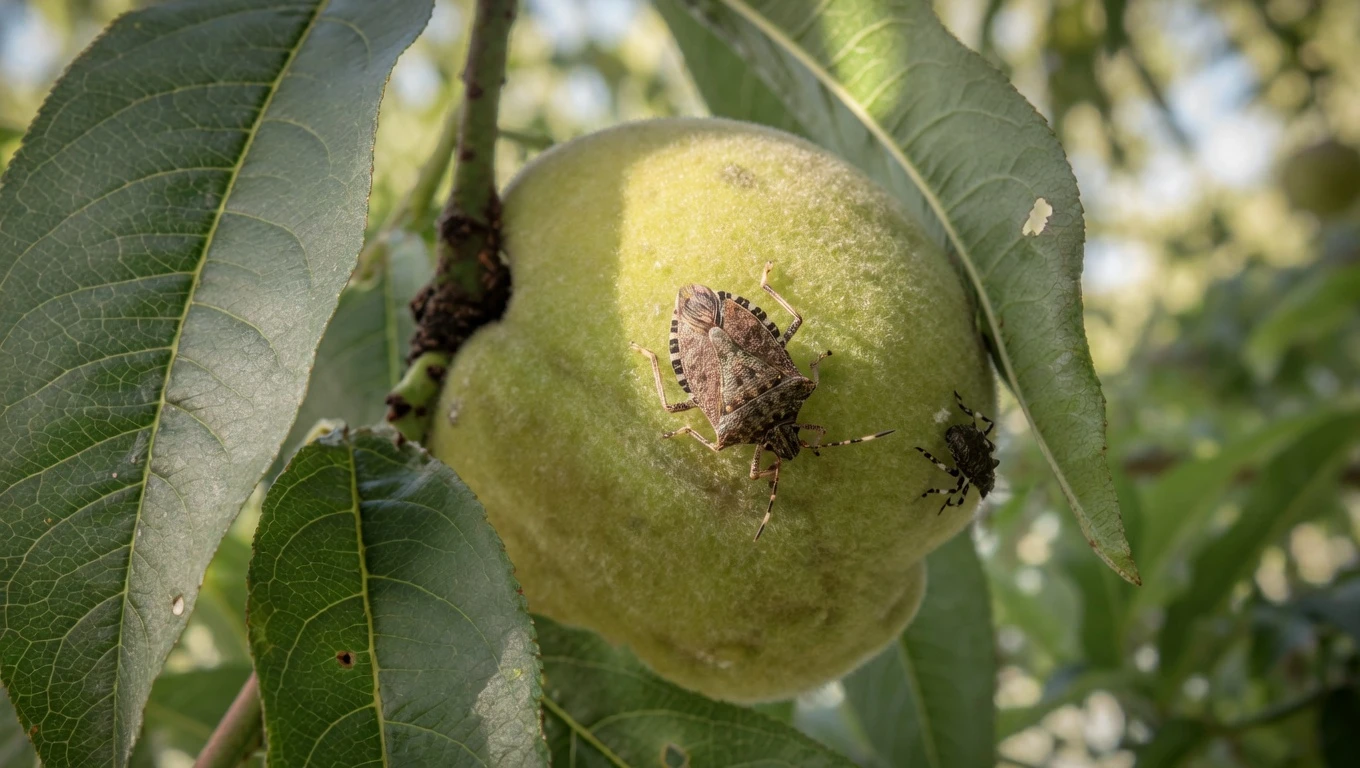
Brown marmorated stink bug
Halyomorpha halys
Description
Key characteristics
12–17 mm long
Mottled grey-brown, similar to the local species Rhaphigaster nebulosa
Four wings: the front pair leathery at the base, the hind pair entirely membranous
Exclusively plant material taken in by sucking (fruit, vegetables, ornamental plants)
Breeds regularly in Ticino, often producing two generations a year (usually only one north of the Alps); proliferates in the absence of natural European enemies
Overwinters as an adult in buildings, forming aggregations of hundreds of individuals
Risks and spread
- Agricultural damage — Significant damage to fruit crops (apples, pears, peaches, kiwifruit) and vegetables (tomatoes, peppers).
- Home invasions — In autumn it enters homes in large numbers to overwinter, causing considerable nuisance (unpleasant odour).
- Biodiversity — Competition with native species in the absence of natural European predators.
Prevention
-
1
Seal gaps and cracks around windows, doors and air vents before autumn
-
2
Fit fine-mesh insect screens to windows and openings
-
3
Check and repair deteriorated seals
-
4
Do not crush the bugs (they release a persistent unpleasant odour)
-
5
Collect them with a vacuum cleaner and release them outside
-
6
In the event of a large invasion, contact a professional
Our intervention
-
Inspection Identification of entry points and winter aggregation areas within the building.
-
Physical exclusion Sealing all access points with silicone, mesh and seals.
-
Treatment Application of residual insecticides at critical points. Vacuuming aggregations with professional equipment.
-
Prevention Installation of pheromone traps to monitor and reduce the local population.
Same category
Other pests we handle
Got a problem? Call us now.
Rapid response across Canton Ticino and Italian-speaking Graubünden. Free quote.