Centipedes
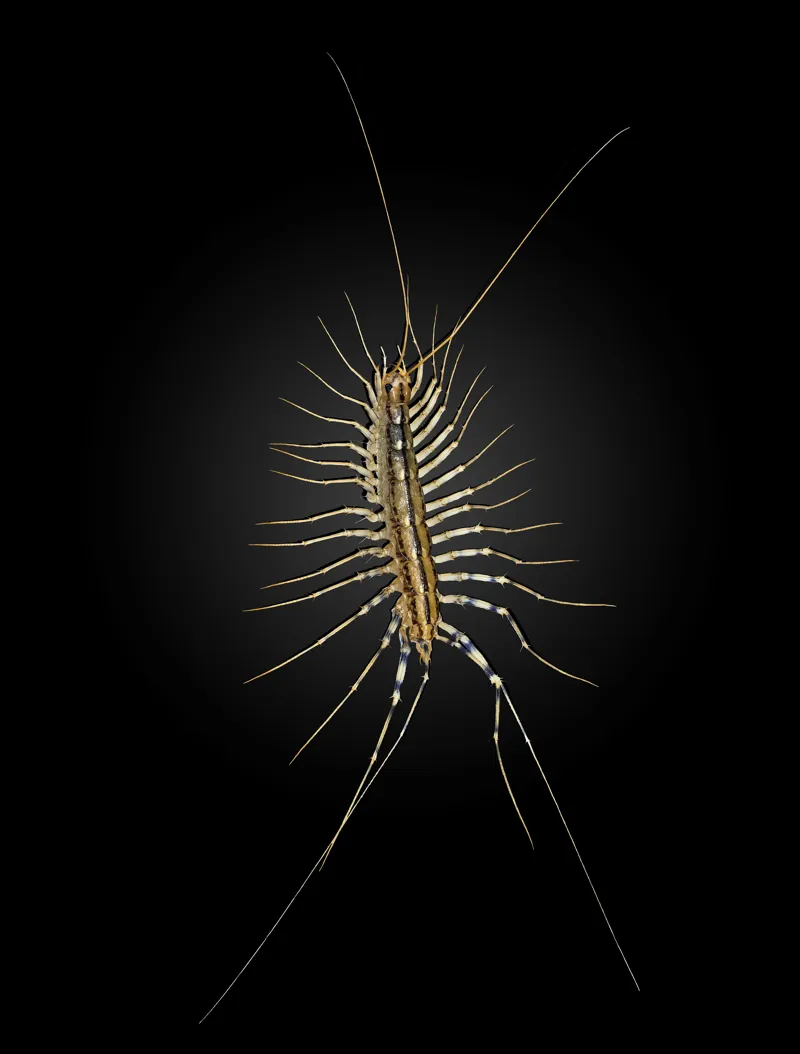
Scutigera coleoptrata
Description
The term centipedes refers to chilopods, arthropods with elongated, segmented bodies and numerous pairs of legs. The house centipede (Scutigera coleoptrata) is common in buildings: it is 2.5–5 cm long, with very long legs and extremely fast movements.
They live in damp, sheltered places — cellars, bathrooms and building cavities — and prey on other small arthropods. They are generally harmless to humans, and their presence indicates moisture and available prey.
Key characteristics
2.5–5 cm (house centipede)
Segmented body, many long legs
Damp, sheltered places
Nocturnal predator, very fast
Generally harmless to humans
Risks and spread
Centipedes are mostly harmless; their presence mainly indicates moisture and other pests on which they feed.
- Nuisance — Their appearance and speed can cause discomfort, despite posing no real danger.
- Environmental indicator — They indicate moisture and the presence of prey (other small arthropods).
- Rare bites — Larger species may deliver a mild bite only if handled.
Prevention
-
1
Reduce humidity and ventilate cellars and utility rooms
-
2
Eliminate the small insects they feed on
-
3
Seal cracks, drains and entry points
-
4
Reduce shelters (stacked materials, debris) in damp areas
Our intervention
TIsistemo addresses the causes (moisture and prey) and, if necessary, applies targeted treatments in hiding places.
-
Site inspection Checking moisture, hiding places and the presence of other pests.
-
Environmental control Reducing moisture and prey to remove favourable conditions.
-
Targeted treatment Specific treatments in cracks and hiding places where needed.
-
Monitoring Checking results over time.
Same category
Other pests we handle
Got a problem? Call us now.
Rapid response across Canton Ticino and Italian-speaking Graubünden. Free quote.