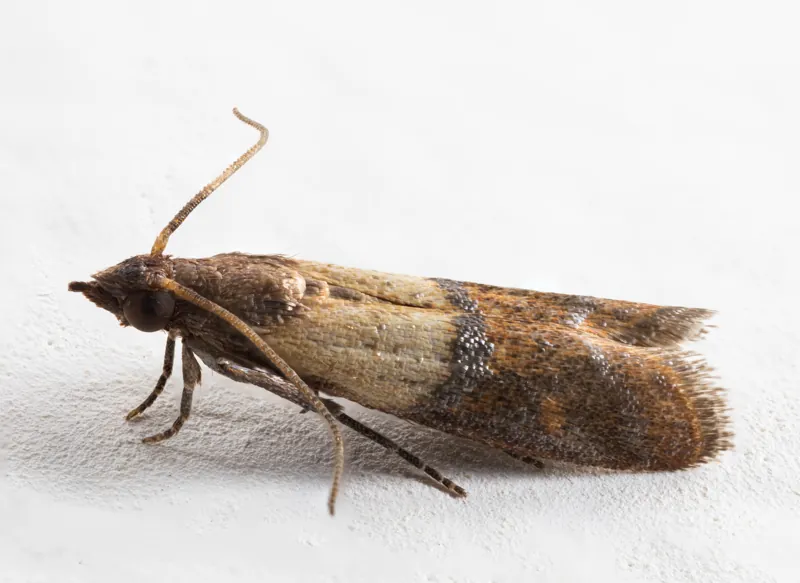
Indianmeal moth
Plodia interpunctella
Description
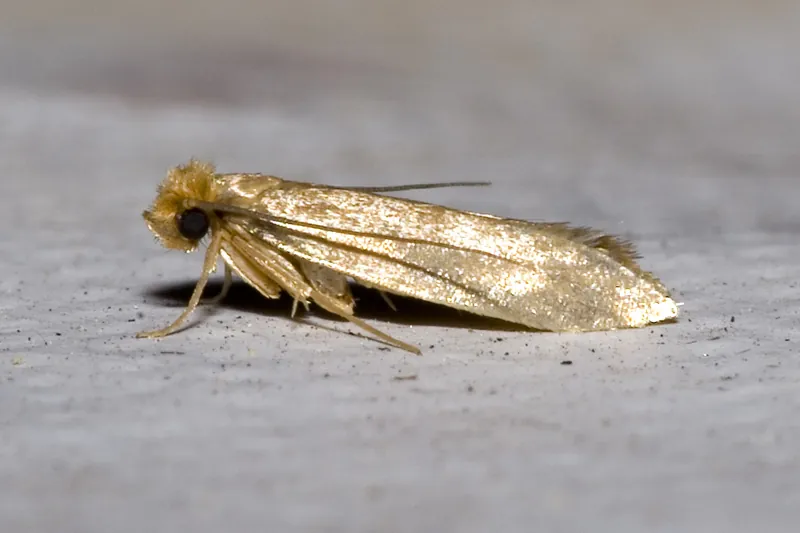
The Indianmeal moth (Plodia interpunctella) is the most common food moth. Adults have a wingspan of around 16 mm and two-tone forewings, pale at the base and coppery-brown towards the tips. The larvae cause the actual damage.
The larvae infest cereals and cereal products, flour, dried fruit, seeds, chocolate and confectionery, spinning silken threads that bind the products together. Adults often flutter around infested areas, especially in the evening.
Key characteristics
~16 mm
Two-tone wings (pale/coppery)
Cereals, flour, dried fruit, confectionery
Spin silken threads in products
Flutter around infested areas
Risks and spread
The Indianmeal moth contaminates stored goods with larvae and silken threads, making them unusable.
- Damaged supplies — Larvae and silken webbing bind together and contaminate products.
- Spread — Spreads rapidly from one packet to nearby stock.
- Food businesses — A common and significant problem in pantries and food businesses.
Prevention
-
1
Store food supplies in airtight containers
-
2
Check incoming products and rotate stock
-
3
Clean shelves, corners and cracks where larvae pupate
-
4
Discard infested products immediately
Our intervention
TIsistemo identifies the source, clears the infestation and monitors with species-specific pheromone traps.
-
Identifying the source Finding affected packets and larval development sites.
-
Clearance Removing infested products and careful cleaning.
-
Pheromone traps Monitoring and trapping adults to reduce the population.
-
Monitoring Regular checks to confirm the result.
Got a problem? Call us now.
Rapid response across Canton Ticino and Italian-speaking Graubünden. Free quote.