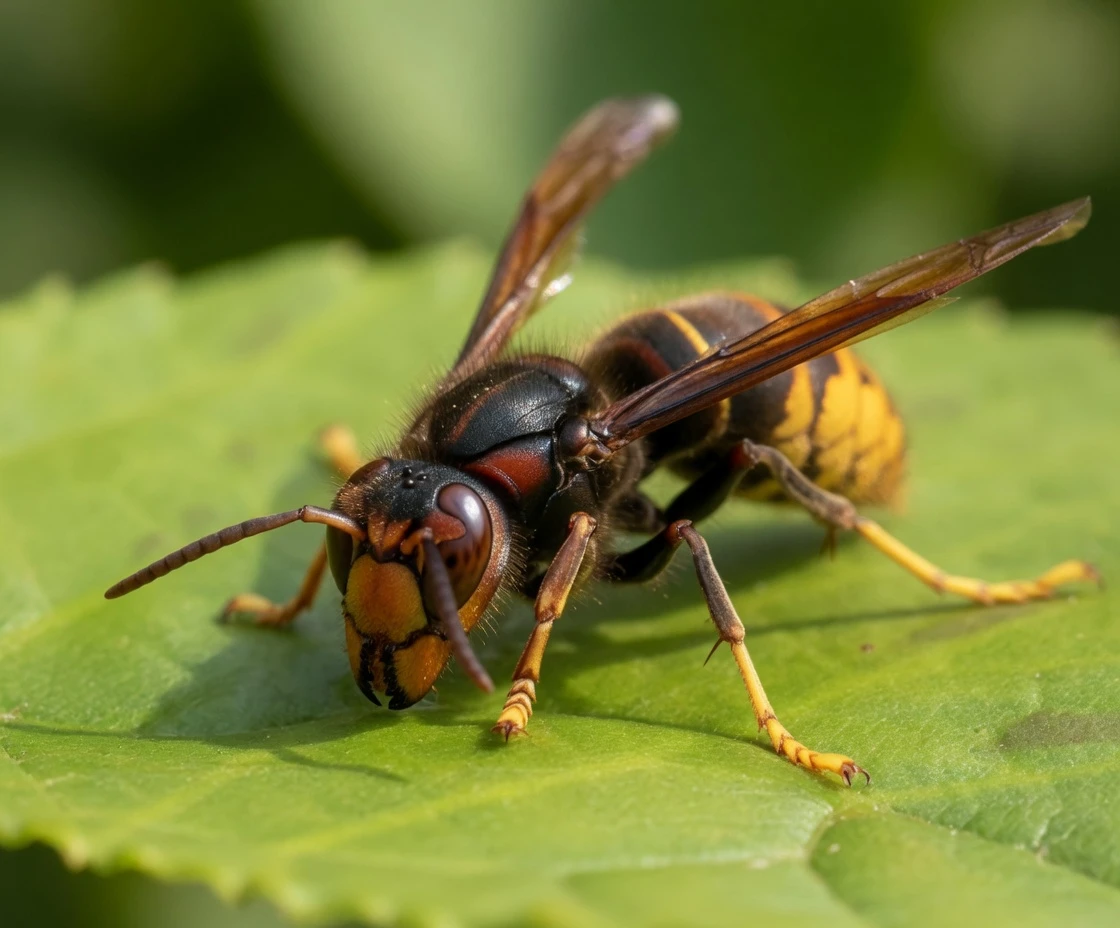
Vespa velutina
Vespa velutina
Species subject to mandatory reporting. The Asian hornet (Vespa velutina) is an invasive species. If you find a nest, do not intervene yourself: management and removal are the responsibility of the cantonal authorities. Report any sightings through the Canton of Ticino portal.
Description
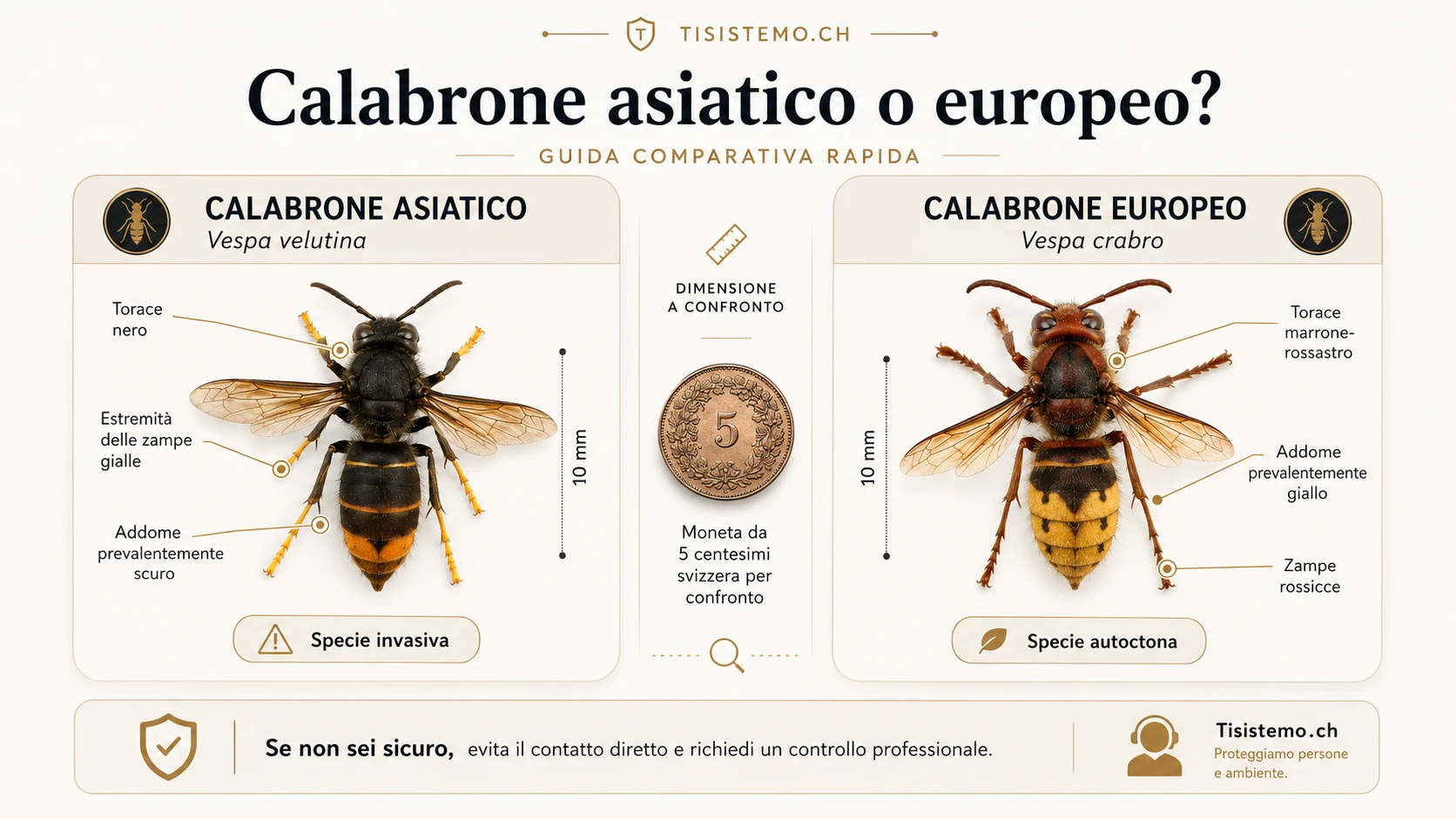
Key characteristics
Queen: 30 mm; workers: 20–25 mm
Dark body with orange bands on the abdomen and yellow leg tips (a distinguishing feature)
Small primary nests in spring; large secondary nests (up to 80 cm) in trees in summer and autumn
Active predator of honeybees and other insects; also feeds on ripe fruit
The queen establishes a new colony each spring; colonies can contain thousands of individuals
From March to November, with peak predation at beehives in summer and autumn
Risks and spread
- Beekeeping — Heavy predation of honeybees in front of hives, potentially destroying entire colonies.
- Agriculture — A threat to fruit growing, viticulture and horticulture through the reduction of pollinators.
- Biodiversity — Competition with native species and disruption of local ecosystems.
- Public health — Painful sting, with a risk of anaphylaxis in people with allergies. Less aggressive than the European hornet, but defends its nest.
Prevention
-
1
Visually monitor hives, water sources and food sources (especially from August to November); traps are not currently recommended in Switzerland
-
2
Photograph and immediately report any suspicious sightings
-
3
Do not attempt to remove nests yourself
-
4
Protect beehives with hornet guards
-
5
Report sightings at www.calabroneasiatico.ch or contact the cantonal authorities
Our intervention
-
Identification Species confirmation through a photograph and a report to the cantonal Vespa velutina working group.
-
Locating the nest Tracking flight paths to locate the secondary nest, often high up in trees.
-
Professional removal Nest removal using specialist equipment (telescopic pole, professional insecticide). To be carried out at dusk.
-
Monitoring Ongoing surveillance of the area to check for remaining nests or newly established colonies.
Same category
Other pests we handle
Got a problem? Call us now.
Rapid response across Canton Ticino and Italian-speaking Graubünden. Free quote.