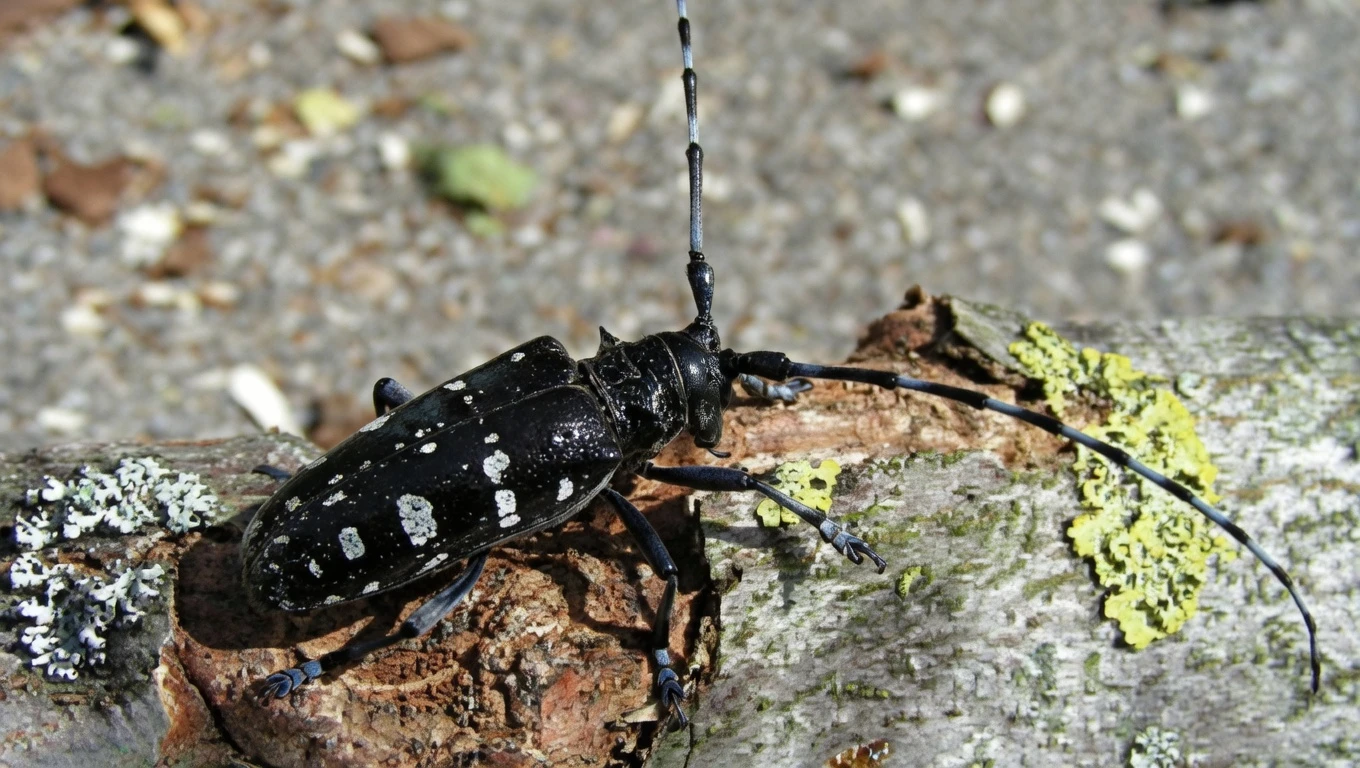
Asian longhorned beetles
Anoplophora glabripennis / A. chinensis
Description
Key characteristics
A. glabripennis 20–35 mm; A. chinensis around 25–40 mm (adult, excluding antennae)
Shiny black body with pale spots on the wing cases
As long as or longer than the body (25–80 mm), 11 segments with grey-blue bases
Legless, cream-coloured with a brownish head and serrated bands behind the head
Two years from larva to adult in Switzerland. 30–60 eggs laid under the bark each year
Over 100 species: maples, horse chestnuts, birches, hazels, willows, poplars
Risks and spread
- Urban trees — Destruction of ornamental and avenue trees in cities. Infested trees die within a few years.
- Forest resources — A threat to broadleaf forests, affecting biodiversity and slope stability.
- Safety — Trees weakened by larval tunnels can collapse suddenly, posing a risk to people and property.
- Economic impact — Enormous eradication costs: felling, destruction of material and monitoring over several years.
Prevention
-
1
Check wood packaging from abroad
-
2
Regularly inspect trees for circular exit holes around 1 cm in diameter
-
3
Check for frass (sawdust) at the base of trees
-
4
Do not move firewood from infested areas
-
5
Report suspected cases IMMEDIATELY to the cantonal plant protection service
-
6
Capture the insect (do not kill it), photograph it and report it with an exact location
Our intervention
-
Identification Species confirmation and delimitation of zones: central (100 m), focal (500 m), buffer (2 km).
-
Restrictions Official restrictions on the movement of plant material within the delimited zones.
-
Monitoring Monitoring for 4 consecutive years without new findings before eradication is declared.
Same category
Other pests we handle
Got a problem? Call us now.
Rapid response across Canton Ticino and Italian-speaking Graubünden. Free quote.