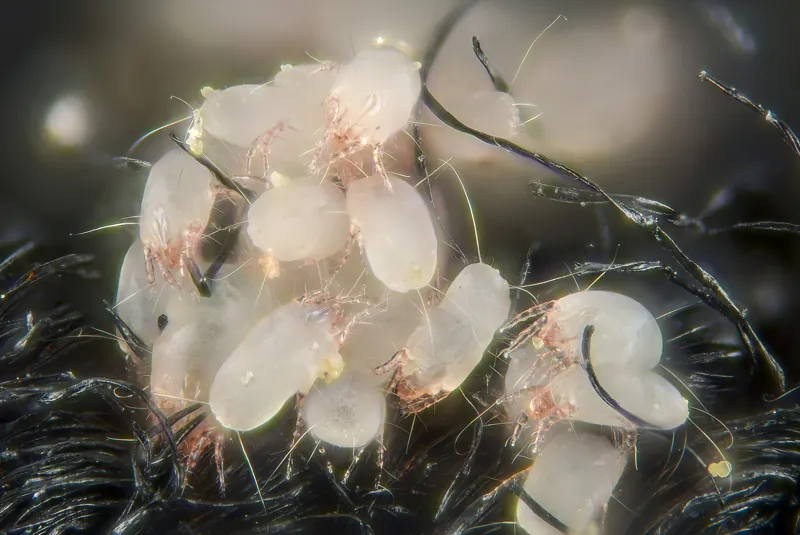
Dust mites
Dermatophagoides spp.
Description
Dust mites (Dermatophagoides spp.) are microscopic organisms, around 0.2–0.3 mm long and invisible to the naked eye. They live in mattresses, pillows, carpets, sofas and fabrics, where they feed on the skin flakes we shed every day.
They thrive in warmth and humidity. They do not bite or directly transmit diseases, but their remains and droppings are among the main allergens in homes.
Key characteristics
Microscopic (~0.3 mm)
Mattresses, pillows, carpets, fabrics
Skin flakes
Thrive in relative humidity above 50% and warmth; found in homes up to around 1200 m altitude
Invisible to the naked eye
Risks and spread
The main risk from dust mites is allergic: their allergens can trigger and aggravate respiratory and skin conditions.
- Respiratory allergies — Among the most common causes of allergic rhinitis indoors.
- Asthma — The allergens can trigger or worsen asthma in sensitive individuals.
- Dermatitis — Can contribute to skin reactions such as atopic dermatitis.
- Air quality — Reduce the healthiness of frequently used spaces.
Prevention
-
1
Keep indoor humidity below 50% and ventilate frequently
-
2
Wash linen and fabrics at 60°C
-
3
Use mite-proof covers for mattresses and pillows
-
4
Vacuum with a HEPA filter and reduce carpets and curtains
Our intervention
For dust mites, the approach focuses mainly on environmental control and sanitisation: reducing humidity and hygienically cleaning fabrics and rooms.
-
Assessment Assessing rooms and factors that favour dust mites.
-
Moisture control Advice and measures to reduce humidity and improve ventilation.
-
Sanitisation Hygienic cleaning of fabrics and rooms to reduce allergens and mite burden.
-
Maintenance Advice and checks to maintain results over time.
Same category
Other pests we handle
Got a problem? Call us now.
Rapid response across Canton Ticino and Italian-speaking Graubünden. Free quote.