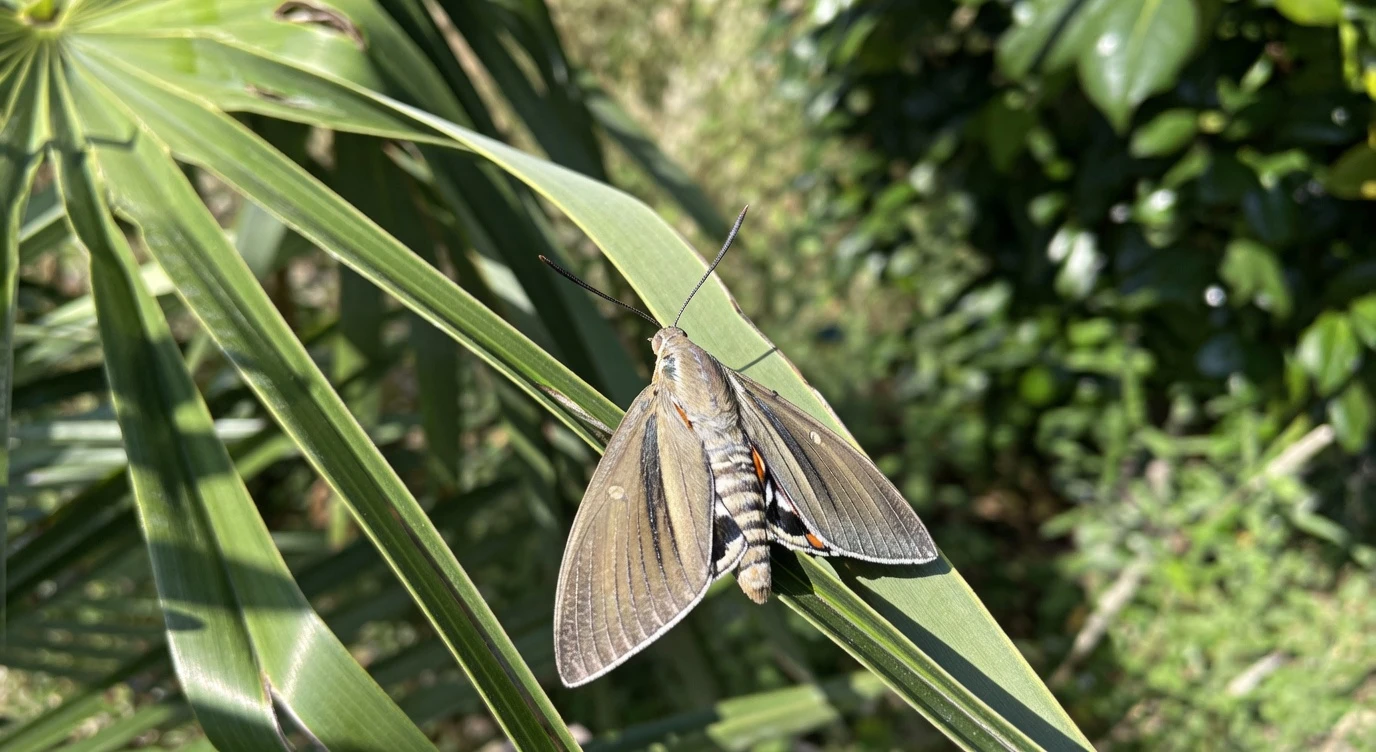
Palm borer moth
Paysandisia archon (Burmeister, 1880)
Description
Key characteristics
Large lepidopteran (butterfly/moth)
9–11 cm
Olive-brown forewings, orange hindwings with black and white spots
Whitish, up to 8 cm; tunnel into the palm’s heart
Chinese windmill palm (Trachycarpus fortunei), Canary Island date palm (Phoenix canariensis), European fan palm (Chamaerops humilis), Mexican blue palm (Brahea armata)
Adults fly from May to September (peak in June–July), during the hottest daytime hours
Risks and spread
- Palm death — Larval tunnels in the palm’s heart interrupt the flow of nutrients, causing the plant to die.
- Landscape heritage — A risk to the ornamental palms that characterise Ticino’s landscape and tourist appeal.
- Spread — Rapid spread in areas with a mild climate, especially around Locarno and Lugano.
Prevention
-
1
Regularly monitor palms for signs of infestation (holes, frass, unusually dry leaves)
-
2
Inspect newly purchased palms before planting
-
3
Report sightings of adults or suspicious damage to GL OAI (the working group on invasive non-native organisms)
-
4
For a severely affected palm: fell it, seal the first 60 cm in a closed bag and transport it to the cantonal waste-to-energy plant
Our intervention
-
Diagnosis Inspection of the palm to confirm the presence of larvae, tunnels and damage to the heart.
-
Preventive treatment Experimental approaches (Steinernema carpocapsae nematodes, trunk injection, pheromones) are being studied but are NOT approved in Switzerland; the recognised method in Ticino is prompt felling of affected palms with controlled disposal.
-
Protection Nets to prevent egg-laying and monitoring with pheromone traps on palms to be protected.
Same category
Other pests we handle
Got a problem? Call us now.
Rapid response across Canton Ticino and Italian-speaking Graubünden. Free quote.