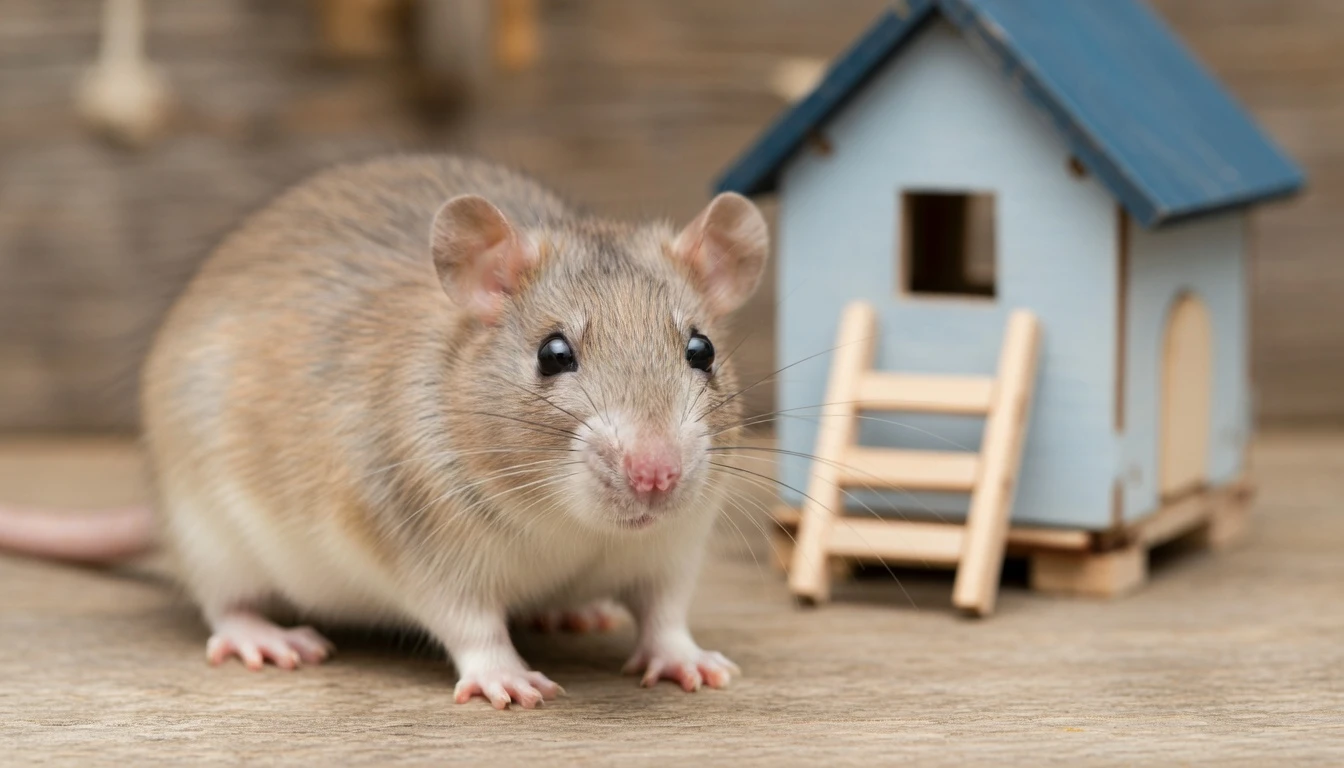
House mouse
Mus musculus
Description
The house mouse (Mus musculus) is a small commensal rodent closely associated with human environments. It measures 16–20 cm including the tail, weighs 15–24 g and is recognised by its pointed snout, large bare ears and thin, tapering tail, almost as long as its body. Its coat is greyish-brown on the back and lighter on the belly.
It is mainly nocturnal, but also active during the day inside buildings. Agile, it climbs, jumps and swims easily and can squeeze through gaps just a few millimetres wide. An opportunistic omnivore, it feeds on stored food, cereals, fats and food scraps and does not need free-standing water.
Its reproductive capacity is high: gestation lasts 18–19 days, with 5–6 young per litter and up to one litter a month; sexual maturity is reached within a few weeks. An infestation can therefore develop very quickly.
Key characteristics
16–20 cm (including tail)
15–24 g
Greyish-brown, lighter belly
Nocturnal, agile climber
Omnivorous: stored food, cereals, fats
5–6 young per litter, up to 1 litter per month
Risks and spread
The house mouse is a pest of hygienic, health and economic importance: it contaminates food and surfaces and can carry pathogens.
- Hygiene and health — It contaminates food and surfaces with urine, droppings and hair, and can carry salmonella and other pathogens, as well as parasites.
- Material damage — It gnaws packaging, electrical cables, insulation and structures, risking faults and short circuits.
- Stored food — It consumes and damages stocks and raw materials, rendering them unusable.
- Rapid proliferation — Its high reproductive capacity can quickly turn a few individuals into an infestation.
Prevention
-
1
Seal gaps, holes and openings larger than 6 mm along walls, doors and utility installations
-
2
Store food and supplies in airtight containers
-
3
Keep spaces tidy and clean, removing accessible scraps and waste
-
4
Reduce shelter (stacked materials, boxes) near walls and storage areas
-
5
Regularly check cellars, stores and utility rooms for early signs
Our intervention
TIsistemo tackles rodent infestations with an integrated approach tailored to the environment and level of infestation, prioritising safety and discretion.
-
Site inspection and identification Inspection to confirm the species, identify access routes, shelter and food sources, and assess the extent of the infestation.
-
Exclusion and securing the site Advice and measures to close entry points and reduce shelter and food sources.
-
Targeted control Placement of traps and baits in secure stations inaccessible to people and non-target animals, following good practice.
-
Monitoring Regular checks to assess effectiveness and prevent further infestations.
Same category
Other pests we handle
Got a problem? Call us now.
Rapid response across Canton Ticino and Italian-speaking Graubünden. Free quote.