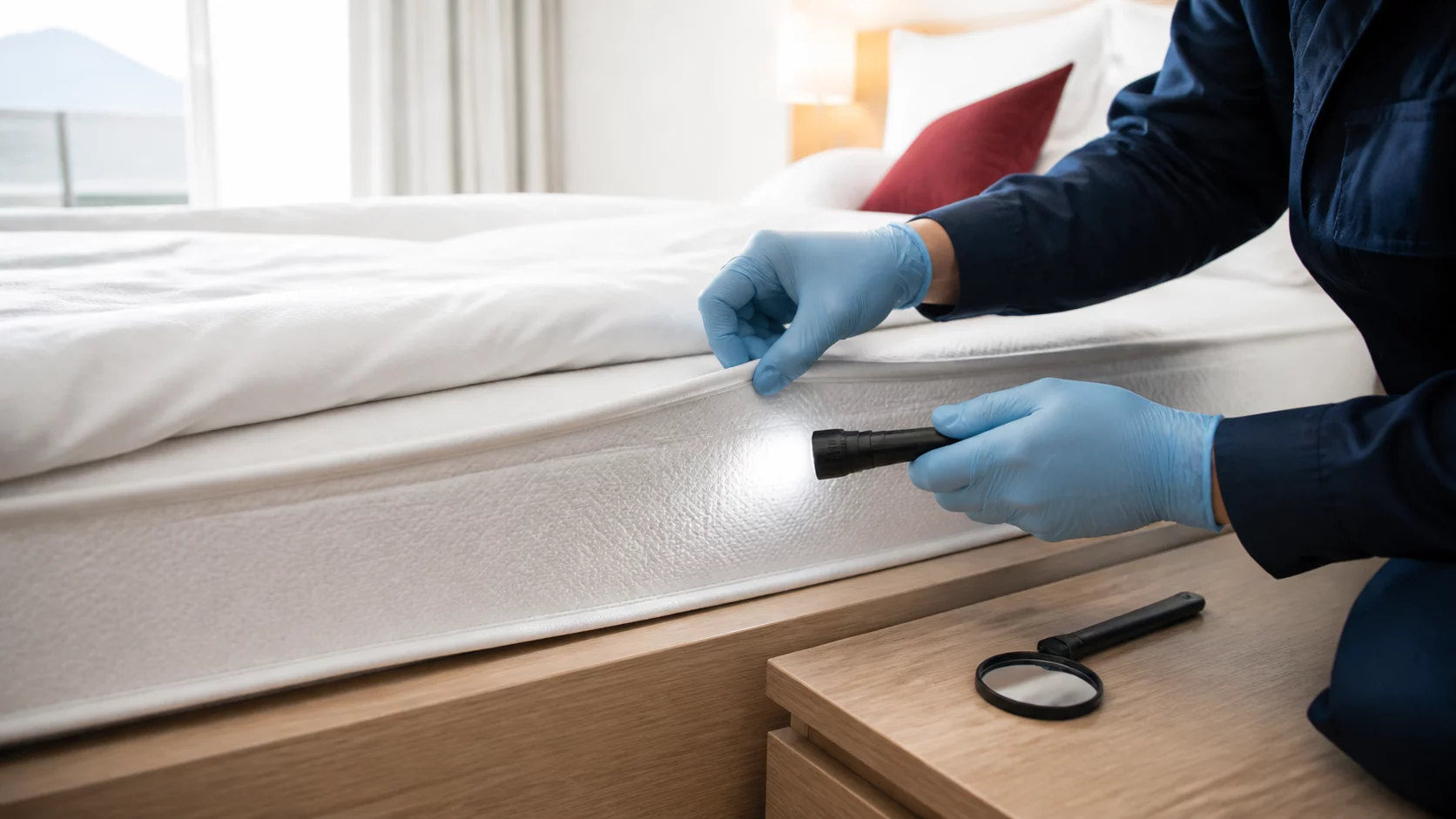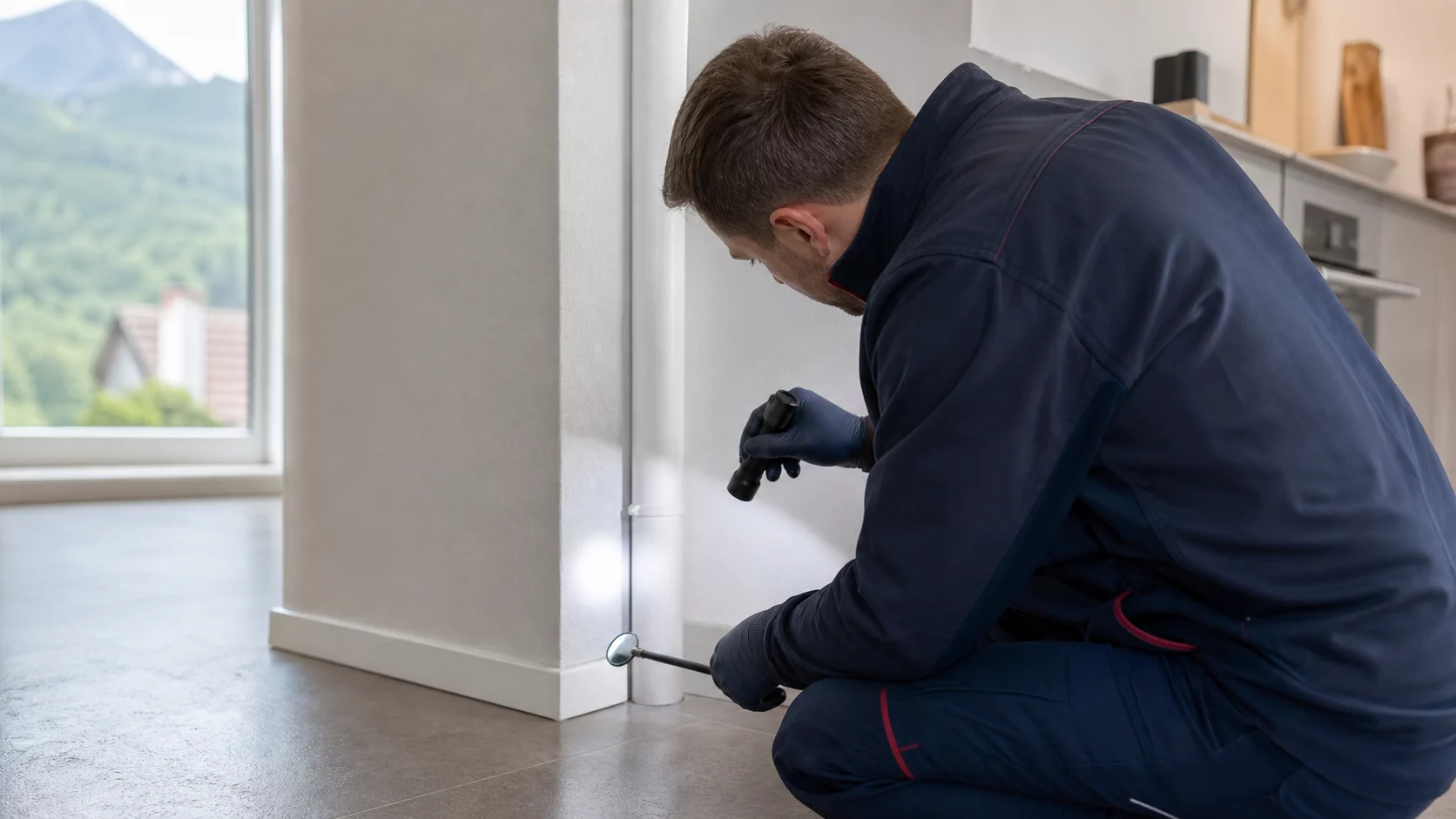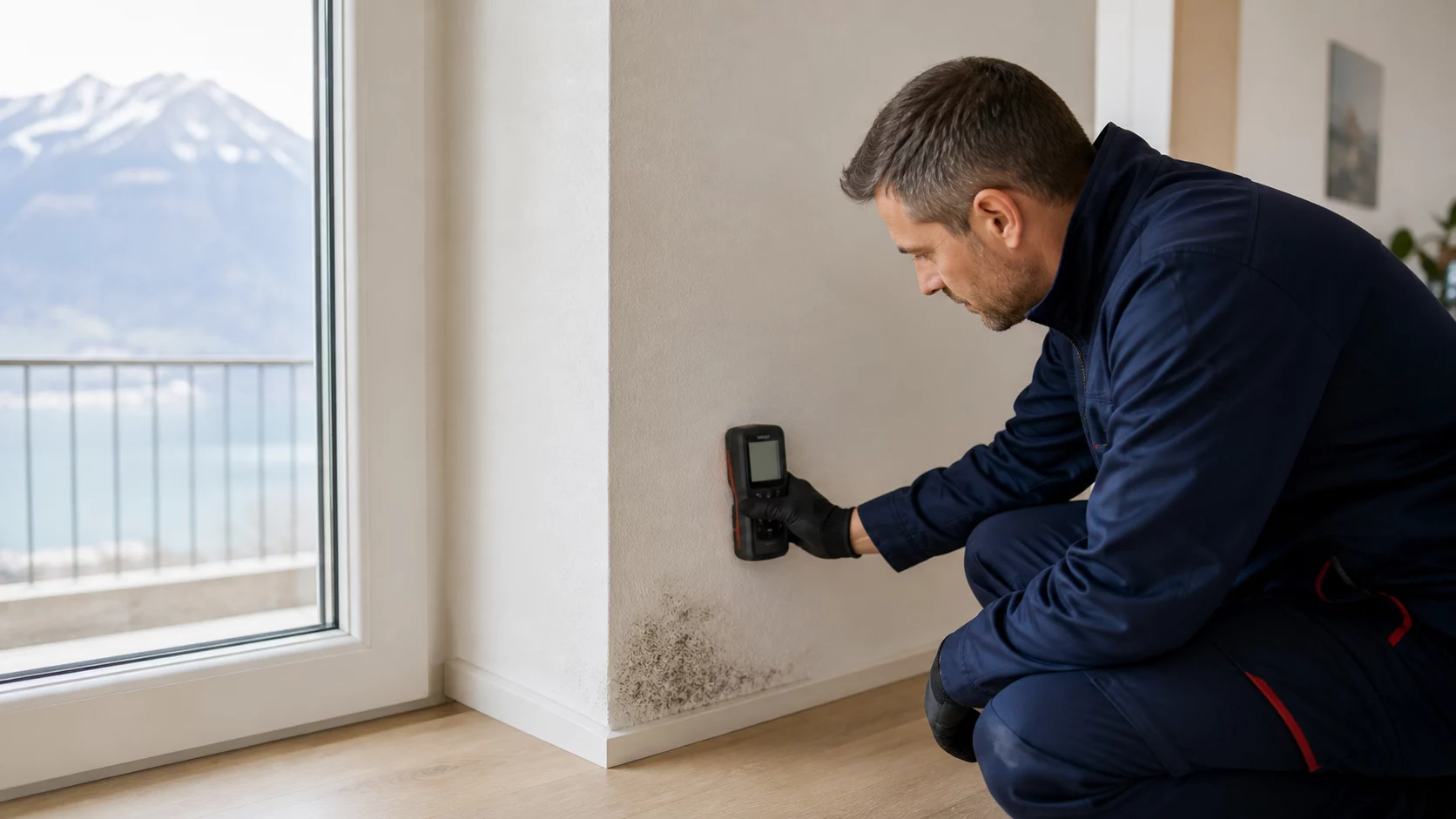
When a mould mark returns within a few weeks, the paint is rarely the real problem. Visible growth is the result of moisture meeting a suitable surface. As long as the source remains active, cleaning or repainting can only conceal it for a while.
Different causes need different solutions
Condensation on a cold surface
Humid indoor air, cold walls and insufficient air exchange can cause water vapour to condense in corners, behind wardrobes or around windows. Thermal bridges make particular areas vulnerable even when the rest of the room appears dry.
A leak or water ingress
An exterior joint, roof detail, pipe or drain can introduce water into the structure. Extra ventilation will have little effect in this case: the source has to be located and repaired.
Moisture within the building
Materials that have not dried, rising damp or a construction defect call for a broader assessment. The place where mould appears is not always where water entered.
Clues that support a diagnosis
Record when the mark appears, whether it changes after rain or with the season, and which activities create steam in the room. Persistent odour, peeling paint, tide marks, daily condensation and walls that feel cold are useful observations. A domestic hygrometer can show the pattern of relative humidity, but a single reading cannot identify the cause.
In rented property, take photographs and notify the owner or property manager promptly before altering the affected surface.
Sensible first measures
Ventilate briefly and intensively several times a day, especially after showering and cooking.
Use bathroom and kitchen extract systems correctly and keep the indoor temperature reasonably stable.
Allow air to circulate behind furniture placed against cold external walls.
Have visible leaks repaired without delay.
Monitor temperature and humidity over several days and relate the readings to how the room is used.
What does not address the cause
Painting straight over mould, repeatedly using aggressive products or dry-brushing the area may disperse material and does not correct the moisture. Even an effective surface treatment should be part of a plan that includes drying, fixing the cause and checking the result.
When a professional assessment is needed
Seek advice when the affected area is extensive or keeps returning, there is a strong odour, porous materials are involved or a hidden leak is possible. If occupants have respiratory conditions or particular sensitivities, extra caution is appropriate and medical questions should be discussed with a doctor.
A technical visit can combine moisture readings, surface temperatures and an assessment of the building context. TIsistemo then defines a proportionate mould-remediation plan for homes and businesses in Ticino, Mesolcina and the Calanca valley, with the aim of reducing recurrence.
Source and further reading
The Swiss Federal Office of Public Health recommends identifying and removing the moisture source and matching remediation to the extent of the problem.